We’ve added this paper by MPG member, Paul Moloney, published in Disability and Society 13 years ago, as sometimes it’s worth going back and seeing whether perspectives have shifted or maybe set in even more firmly. Whilst this paper is about the diagnosis of Aspgerger’s, it has so much relevance to the current debates about ADHD and neurodiversity, especially in the light of Channel 4’s documentary ‘The Great ADHD Myth?’https://midpsy.uk/wp-content/uploads/2026/08/how-can-a-chord-readable-version.pdf
Author: Midlands Psychology Group
Promoting social materialist psychology
Categories
Capitalism is Killing the Future
Grace Blakeley’s latest blog on Substack is a welcome read.
Even before considering the call for resistance, readers might note how validating it is to read something which makes so much sense. Not just validating. It’s actually reassuring for any of us to know we’re not the only one. We’re not going mad. What’s happening is actually happening and it’s deeply shocking.
The latest Netflix documentary, Plastic Detox, is yet another of the endless examples of how this is all a natural result of capitalism. This plastic, which very possibly caused some of our cancers, our immune disorders, our inferitlity, is the result of greed and the pursuit of profit for a small minority, whilst the rest of us pay, in some cases, with our lives.
Mark Fisher was a speaker at one of our Midlands Psychology Group conferences, not many years before he took his own life. We would have liked to reference his talk but unfortunately it’s not on our website and we can’t find record of it anywhere in our back catalogues. Memory is not playing ball either. But, it being a critical psychology conference, Mark Fisher would no doubt have been making the links between mental health problems and capitalism.
But it was the final few paragraphs of Grace’s piece, inspiring the need for resistance, which grabbed one of us (Penny Priest) the most. I became interested in acts of resistance in psychological work many years ago, when I came across a paper I fell in love with (never having fallen in love with an academic paper before): Small Acts of Living: Everyday resistance to violence and other forms of oppression, by the Canadian family therapist, Allan Wade. The paper describes Wade’s approach to therapy which is based on the observation that whenever persons are badly treated, they resist. It described so well how many of the people I had the privilege of meeting in my clinical work had engaged in acts of resistance in order to survive. Wade goes on to say how ‘alongside each history of violence and oppression, there runs a parallel history of prudent, creative, and determined resistance.’ People who have been on the receiving end of violence and oppression may well recognise this and have their own stories about their survival methods. That paper led me to the book, Small Acts of Resistance: How Courage, Tenacity, and a Bit of Ingenuity Can Change the World.
We’re human beings. Our imaginations are one of our most defining human characteristics. We can imagine a better world. And we can inspire each other in the process of doing so. Who knows what powerful acts of resistance could emerge from us?
Click here to read Grace Blakeley’s reader supported piece. https://open.substack.com/pub/graceblakeley/p/capitalism-is-killing-the-future?utm_campaign=post-expanded-share&utm_medium=web
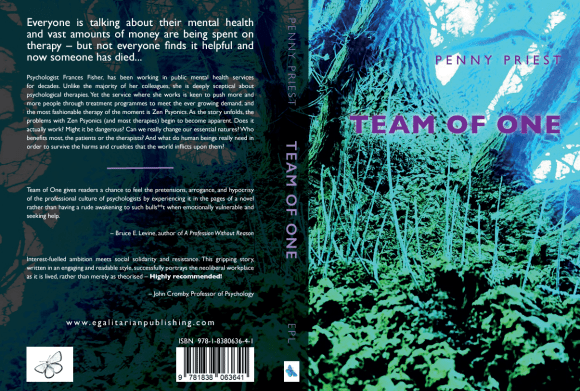
New review of Penny Priest’ novel, Team Of One, by Paul Moloney, for Asylum Magazine.
Categories
The infernal merry go round
The Telegraph posted a headline the other day saying:
‘NHS urges nine million people to get therapy.
Health bosses launch mass media campaign amid fears ‘anxiety epidemic’ is fuelling worklessness crisis.’
I mean, where does anyone begin to unpick all that.
But we had all this when Lord Layard, in collaboration with the Blair government, invented IAPT, to get people off benefits and back to work. They made it sound so simple. And yet it didn’t work.
The Midlands Psychology Group was invited to submit a paper for a special issue about IAPT for Clinical Psychology Forum. We wrote two, which can be found on our publications page: Our Big Fat Multi-Million Pound Psychology Experiment and Blissed Out Britain is Back in Business.
For anyone who wants a trip down memory lane, here is the full special issue:
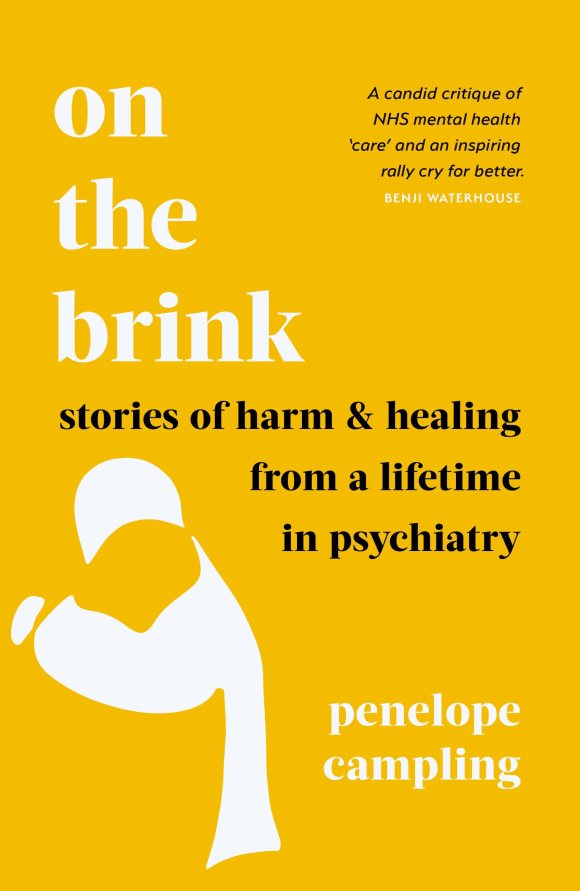
No longer able to continue her work as a consultant clinical psychologist in the NHS, Penny Priest retired in June 2024. Since then she has been struck by just how many other clinical psychologists are feeling rather desperate. And it’s not just psychologists: Penny reviews On The Brink, by psychiatrist and psychotherapist, Penelope Campling. https://www.bps.org.uk/psychologist/bearing-witness-reality
Categories
Broken by the system
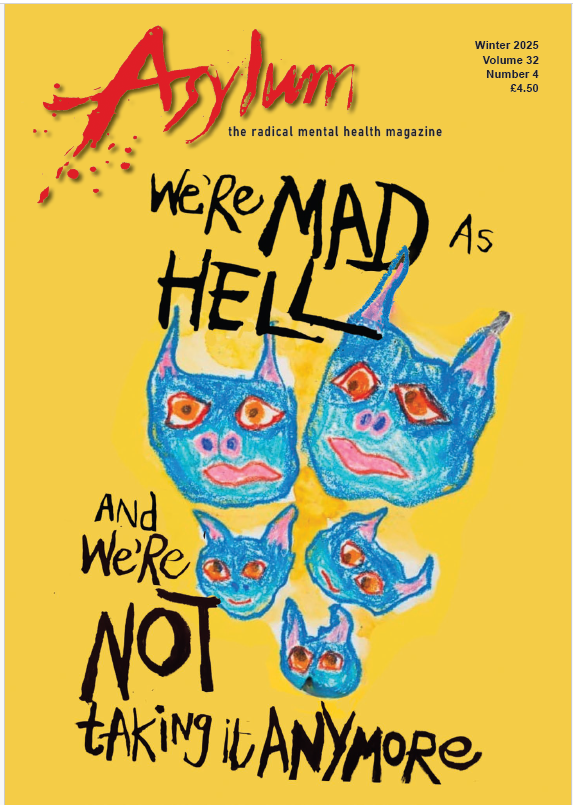
In the latest issue of Asylum magazine, our colleague and friend, clinical psychologist Guy Holmes, shares his experience of being made ill by the very same system which is supposed to help those in distress.
Categories
Mike Fox and the Poverty Tourists
Here’s a blast from the past – from the West Midlands Critical and Community Psychology Conference in Birmingham in 2003. It’s a reminder that ‘for you [psychologists] to help people, you’ve got to understand them, and to understand them you’ve got to know where they’re coming from.’ https://midpsy.uk/wp-content/uploads/2025/11/mike-fox-and-the-poverty-tourists.pdf
Categories
The Many Problems with Zen Psyonics
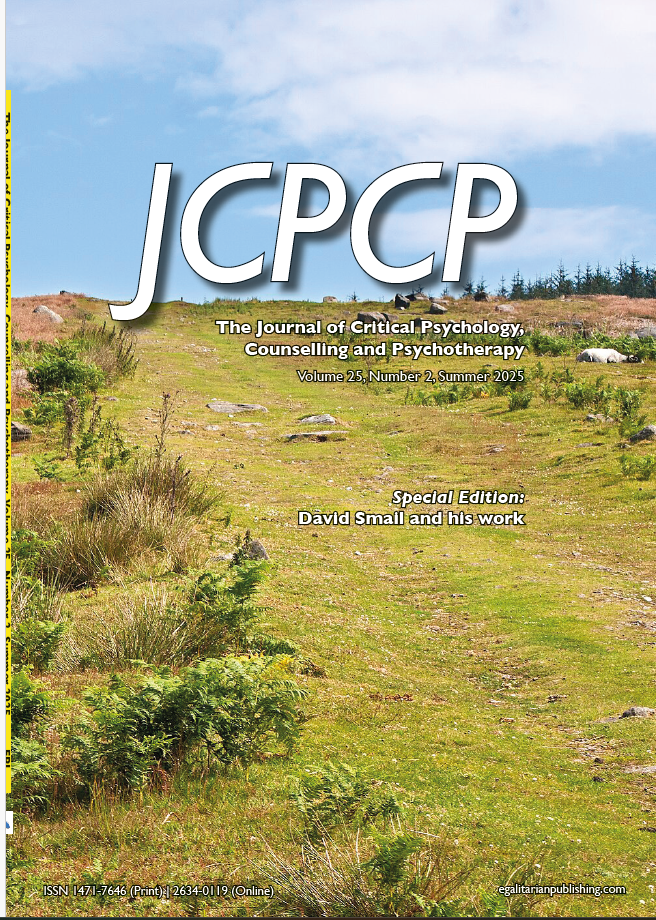
One of the papers in our recent special issue of the Journal of Critical Psychology, Counselling and Psychotherapy, about the legacy of David Smail, is the piece by Penny Priest. Her paper, The Many Problems with Zen Psyonics, includes selected extracts from her recently published
novel, Team Of One, to illustrate David Smail’s critique of the profession of clinical psychology and the need for a social materialist psychology. Reflecting on implications for clinical practice, David warned about a future we are living through today. He also argued the need for: recognizing the limits of psychological therapy; outsight over insight; the importance of including society; and de-psychologization.

Categories
David Smail and his legacy
More than ten years have passed since David’s death and we miss him dearly.
What would he have made of these times? A world coming apart at the seams following more than 40 years of the neo-liberal consensus. A nominal Labour government assiduously prolonging the harmful ‘austerity’ policies of the previous Conservative government. The main schools of psychotherapy and counselling in the UK are more popular in health-policy circles than ever and as riddled with make-believe as they were in David’s time.
Now seems like a fruitful time to take stock of David’s influence in our own lives and work, and to invite younger psychologists, in the early phases of their careers, to share their thoughts on the meaning of his writings for their own practice in these turbulent times. In collaboration with the Journal of Critical Psychology, Counselling and Psychotherapy we have put together a special edition. The nine papers are a tribute to David, and to the enduring importance of his legacy: not just for psychology, but for anyone who wants to understand life as it is, and to live with a measure of courage and hope.
Categories
The Black Dogs of Glaslyn
See page 27 of this month’s Asylum Magazine for Paul Moloney’s review of The Black Dogs of Glaslyn, by our friend and former colleague, Guy Holmes. As explained in the background, Guy worked as a clinical psychologist in the NHS for over 25 years. During that time he published three books in collaboration with service users. He retired from clinical work a decade ago, due to severe mental and physical health problems brought on by work stress, in an environment decimated by austerity. Guy continues to be involved with some Psychology in the Real World groups and raises money for groups and organisations to provide free mental health care. The Black Dogs of Glaslyn is his first novel, influenced by his own and others’ experiences of distress, in a world where there is far too much cruelty.
Asylum, the radical mental health magazine, has been running for nearly 40 years, acting as a platform to voice and discuss all perspectives on mental health. Asylum is a not-for-profit magazine run by volunteers, and supported by PCCS Books. It makes no money from sales of the magazine. It offers free back issues on its website and is grateful to any donations to help continue its work.
https://midpsy.uk/wp-content/uploads/2025/09/asylum-323-digital.pdf
For further info: http://www.asylummagazine.org

